EasyCalc
Sinking Funds: The Simple Way to Pay for Big Expenses Without Debt
Most 'surprise' bills aren't surprises at all. Car tyres, annual insurance, Christmas: you know they're coming. A sinking fund pays for them before they arrive.
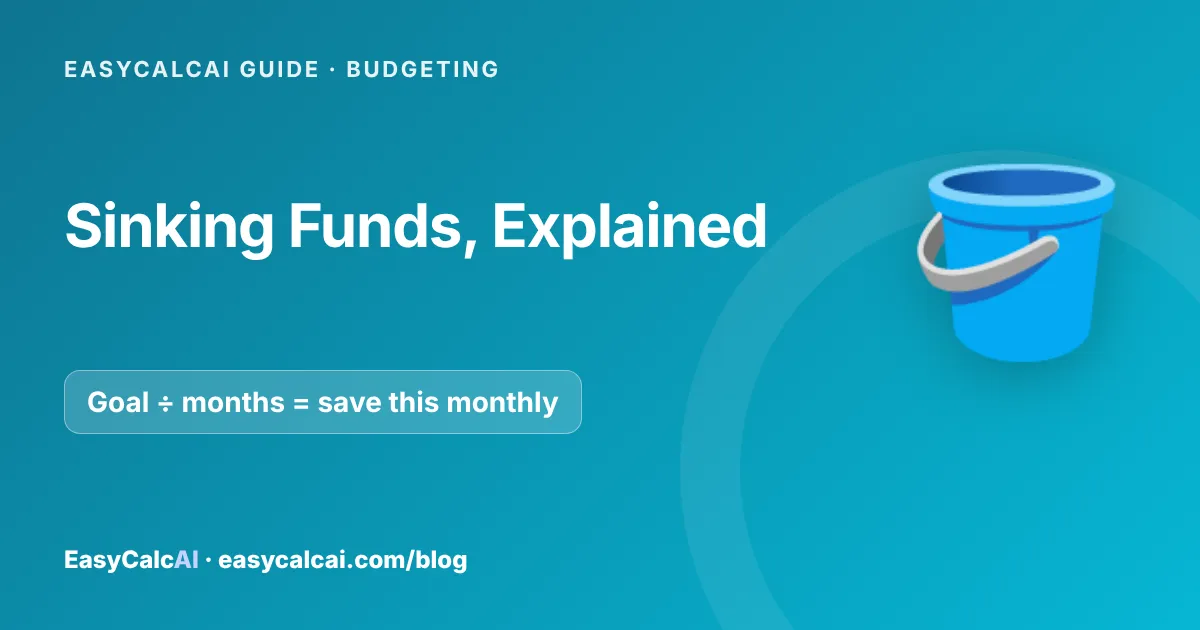
A sinking fund is money you set aside monthly for a known future cost. Monthly amount = (goal − already saved) ÷ months left. To have $1,200 for car repairs in 12 months, save $100 a month.
Enter your goal, months until you need it and what you've saved.
What is a sinking fund?
A pot of savings for one specific, expected expense. Instead of paying $1,200 for car repairs all at once (or on a credit card), you save $100 a month and the bill is already covered when it comes.
Sinking fund vs emergency fund
| Sinking fund | Emergency fund | |
|---|---|---|
| For | Known or likely costs | True surprises: job loss, medical bills |
| Amount | A set goal by a date | Usually 3–6 months of expenses |
| Spend it? | Yes, that's the plan | Only in an emergency |
Example sinking funds
| Fund | Goal | Months | Save per month |
|---|---|---|---|
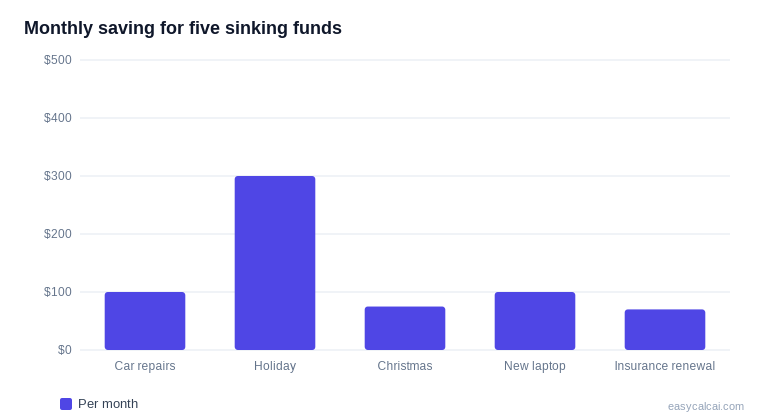
| Car repairs | $1,200 | 12 | $100.00 |
| Holiday | $3,000 | 10 | $300.00 |
| Christmas | $900 | 12 | $75.00 |
| New laptop | $1,500 | 15 | $100.00 |
| Insurance renewal | $840 | 12 | $70.00 |
| Total | $7,440 | $645.00 |
Sinking fund ideas
Car maintenance and tyres, annual insurance or car tax, holidays, gifts and Christmas, school fees and uniforms, medical and dental, home repairs, a new phone or laptop, pet care, wedding season, and subscriptions billed yearly.
How to set one up
- List expenses that don't happen every month and their yearly cost.
- Divide each by the months until it's due.
- Open a separate savings account or "pot", ideally with interest.
- Automate a transfer on payday.
- Fit the total into the savings part of your 50/30/20 budget.
Let your sinking funds earn interest
Money you'll need within a year or two belongs somewhere safe and accessible: a high-yield savings account, an easy-access ISA, or a liquid fund or recurring deposit in India. Even 4% on $3,000 adds about $120 a year.
Common mistakes
- Using one big pot, so it's unclear what's for what.
- Forgetting irregular costs like annual subscriptions and renewals.
- Raiding a sinking fund for wants; that's what the 30% "wants" budget is for.
Frequently asked questions
What is a sinking fund?
Money saved in small monthly amounts for a specific, expected expense.
How do I calculate a sinking fund?
Subtract what you've already saved from the goal and divide by the months left.
Where should I keep a sinking fund?
In a separate, easy-access savings account or pot, ideally earning interest.
How many sinking funds should I have?
As many as you have predictable irregular expenses; many people start with 3–5.
How many months should a sinking fund cover?
As many as you have until the expense; divide the goal by those months.
Can my emergency fund be a sinking fund?
Keep them separate so planned spending doesn't drain your safety net.
Try your own numbers. It's free, instant and nothing you type is stored.
Sources
This guide is general information, not personal financial advice. Figures were checked on November 2026; rules and rates can change.
Related calculators
Related searches
- what is a sinking fund
- sinking fund vs emergency fund
- sinking fund categories
- how to start a sinking fund
- sinking fund calculator
- how much to save each month for a goal
- sinking funds list
- sinking fund for car
- annual expenses sinking fund
- where to keep sinking funds
- sinking fund ideas list
- sinking fund spreadsheet
- high yield savings for sinking funds
- annual expenses list
- irregular expenses budget
- sinking fund app