EasyCalc
UK Income Tax 2026/27: Rates, Bands, National Insurance and Take-Home Pay
Bands frozen, NI at 8%, and a hidden 60% rate for six-figure earners. Here's what you actually take home in 2026/27.
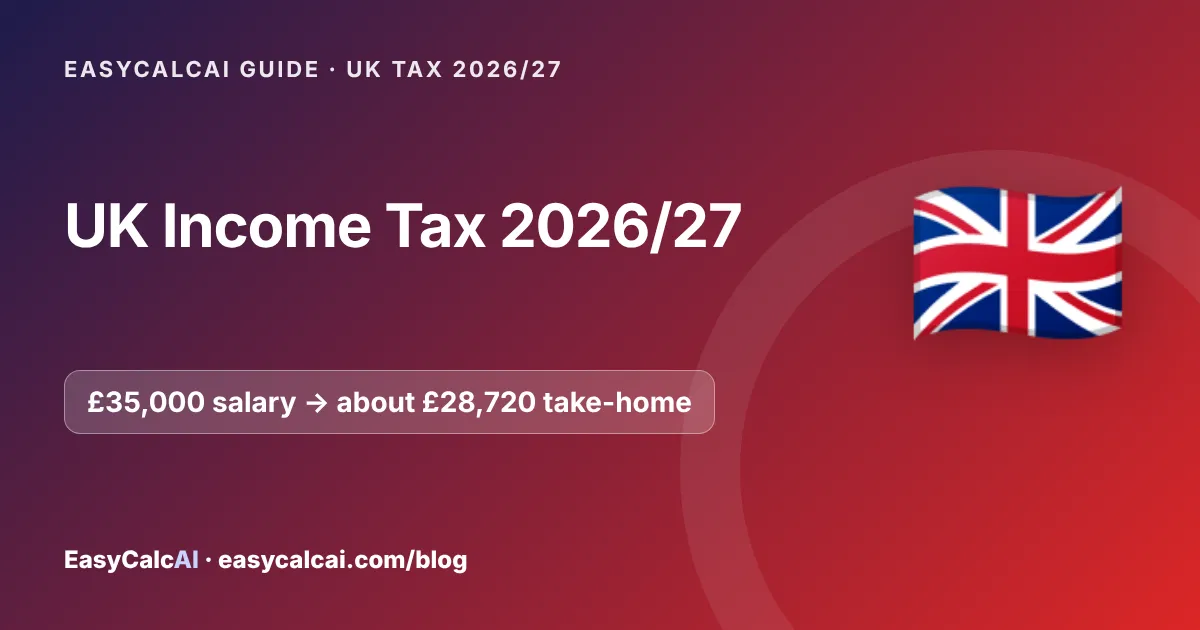
For 2026/27 (England, Wales and NI) you pay 0% on the first £12,570, 20% to £50,270, 40% to £125,140 and 45% above, plus 8% NI between £12,570 and £50,270 and 2% above. A £35,000 salary takes home about £28,720 a year (£2,393 a month).
Enter your salary, pension and student loan to see your 2026/27 take-home pay.
Income tax in the UK runs from 6 April to 5 April. For 2026/27 the thresholds remain frozen at the levels set in 2021, so as wages rise more people are pulled into the 40% band (fiscal drag). National Insurance for employees stays at 8% on the main band and 2% above.
These rates apply in England, Wales and Northern Ireland. Scotland sets its own income tax bands; see our Scottish income tax guide.
2026/27 income tax bands
| Band | Taxable income | Rate |
|---|---|---|
| Personal Allowance | Up to £12,570 | 0% |
| Basic rate | £12,571 – £50,270 | 20% |
| Higher rate | £50,271 – £125,140 | 40% |
| Additional rate | Over £125,140 | 45% |
| National Insurance (Class 1 employee) | Rate |
|---|---|
| £12,570 – £50,270 | 8% |
| Above £50,270 | 2% |
Take-home pay at common salaries (England, no pension)
| Salary | Income Tax | National Insurance | Take-home a year | Take-home a month |
|---|---|---|---|---|
| £25,000 | £2,486 | £994 | £21,520 | £1,793 |
| £35,000 | £4,486 | £1,794 | £28,720 | £2,393 |
| £50,000 | £7,486 | £2,994 | £39,520 | £3,293 |
| £75,000 | £17,432 | £3,511 | £54,057 | £4,505 |
| £100,000 | £27,432 | £4,011 | £68,557 | £5,713 |
| £125,000 | £42,432 | £4,511 | £78,057 | £6,505 |
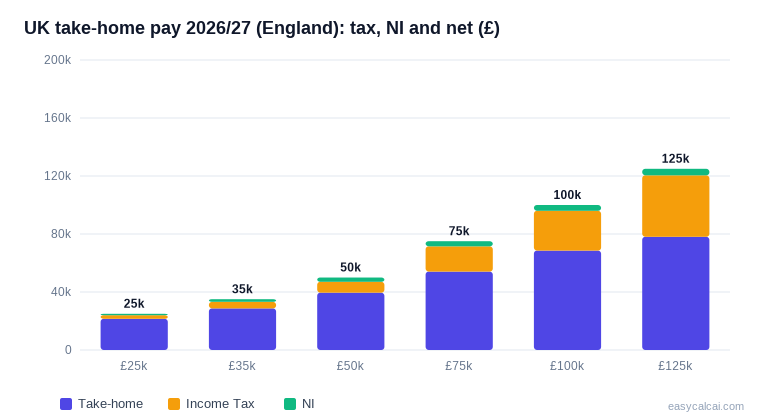
The 60% tax trap between £100,000 and £125,140
Your Personal Allowance falls by £1 for every £2 of income above £100,000, disappearing at £125,140. In that range each extra £100 costs £40 tax plus £20 from the lost allowance (taxed at 40%): an effective 60% rate, plus 2% NI. Parents also lose tax-free childcare and the 30 free hours above £100,000 adjusted net income. A pension contribution or salary sacrifice is the main way out.
Other income
- Savings: Personal Savings Allowance of £1,000 (basic) or £500 (higher). From April 2027 savings tax rates rise by 2 points.
- Dividends: £500 allowance; 10.75%, 35.75% and 39.35% from 2026/27.
- Student loans: 9% of income above your plan's threshold.
- Pension contributions get relief at your marginal rate.
Your tax code
Most people have the code 1257L, meaning a £12,570 allowance. Codes change if you have benefits in kind, untaxed income, Marriage Allowance or underpaid tax from a previous year. Check it in your HMRC app.
Common mistakes to avoid
- Ignoring the 60% trap when negotiating a raise or bonus near £100,000.
- Not checking your tax code after a job change (emergency code 1257L W1/M1).
- Forgetting to claim higher-rate relief on personal pension contributions via self-assessment.
- Assuming your bonus is taxed at a special rate.
How to keep more of your money
- Use salary sacrifice for pensions to save both tax and NI (capped at £2,000 for NI from April 2029).
- Claim Marriage Allowance if your partner earns under £12,570.
- Use ISAs for savings and investments.
- Claim tax relief on work expenses such as uniforms and professional fees.
Key terms explained
- Personal Allowance
- Income you can earn tax-free: £12,570.
- PAYE
- Pay As You Earn: tax deducted by your employer.
- Fiscal drag
- More tax because thresholds are frozen while pay rises.
- Adjusted net income
- The income figure used for the Personal Allowance taper and childcare limits.
How to use the uk income tax calculator
- Enter your gross annual salary.
- Add pension contributions and student loan plan.
- Read income tax, NI and take-home pay per year, month and week.
The calculator runs in your browser, works on any phone and keeps nothing you type. Change one input at a time to see exactly what moves your result.
Frequently asked questions
How much tax do I pay on £30,000?
About £3,486 income tax and £1,394 NI, leaving £25,120.
What is £50,000 after tax?
About £39,520 a year, or £3,293 a month.
When does the 40% rate start?
On income above £50,270.
What is the Personal Allowance for 2026/27?
£12,570, reduced above £100,000 income.
What is the NI rate in 2026/27?
8% between £12,570 and £50,270 and 2% above for employees.
How do I avoid the 60% tax trap?
Pension contributions or salary sacrifice that bring adjusted net income back to £100,000.
Try your own numbers. It's free, instant and nothing you type is stored.
Sources
- GOV.UK – Income Tax rates and Personal Allowances
- GOV.UK – National Insurance rates and categories
- Which? – National Insurance rates 2026-27
This guide is general information, not personal financial advice. Figures were checked on November 2026; rules and rates can change.
Related calculators
Related searches
- uk income tax calculator
- take home pay calculator uk
- income tax bands 2026/27
- how much tax do i pay on 35000
- 40% tax threshold 2026
- personal allowance 2026/27
- national insurance rates 2026/27
- 60% tax trap
- £50,000 after tax
- uk salary calculator monthly
- tax code 1257l
- how much tax on £100k uk