EasyCalc
Child Benefit 2026/27: Rates, the £60,000 High Income Charge and How to Keep More
Child Benefit is worth over £2,300 a year for two children. Earn over £60,000 and you start paying it back. Here's exactly how much, and how to reduce it legally.
Child Benefit is £27.05 a week for the eldest child and £17.90 for each other child in 2026/27. If the higher earner's adjusted net income is over £60,000, the charge is 1% for every £200 above it, so it's fully repaid at £80,000. At £65,000 a family with two children repays 25% (£584) and keeps £1,753.
Enter the number of children and the higher earner's adjusted net income.
Child Benefit rates 2026/27
| Weekly | Yearly | |
|---|---|---|
| Eldest or only child | £27.05 | £1,406.60 |
| Each additional child | £17.90 | £930.80 |
| Two children | £44.95 | £2,337.40 |
How the High Income Child Benefit Charge works
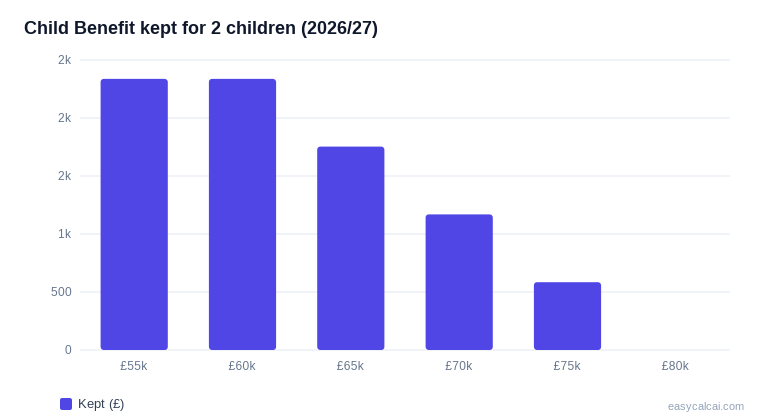
If you or your partner has adjusted net income over £60,000, the higher earner pays a tax charge of 1% of the benefit for every £200 of income above £60,000. At £80,000 or more the charge equals the full benefit.
| Higher earner's income | Charge | Kept (2 children) |
|---|---|---|
| £55,000 | 0% | £2,337.40 |
| £60,000 | 0% | £2,337.40 |
| £65,000 | 25% | £1,753.05 |
| £70,000 | 50% | £1,168.70 |
| £75,000 | 75% | £584.35 |
| £80,000 | 100% | £0.00 |
Reducing the charge legally
Adjusted net income is reduced by pension contributions (including salary sacrifice) and Gift Aid donations. Paying £5,000 more into a pension at £65,000 can wipe out the charge entirely, on top of the tax relief; see the pension tax relief calculator.
Should you still claim over £80,000?
Usually yes, then opt out of payments. Claiming protects National Insurance credits for a parent who isn't working (which count toward the State Pension) and makes sure your child gets a National Insurance number automatically.
Real-life example
Tom earns £68,000 and his partner £30,000; they have two children. Tom's charge is 40% (£8,000 over ÷ £200), about £935 a year. If Tom pays £8,000 more into his pension through salary sacrifice, his adjusted net income falls to £60,000: the charge disappears, and he also saves 40% Income Tax and 2% National Insurance on that £8,000.
Paying the charge
The higher earner pays the charge through Self Assessment or, from 2025 onwards, can ask HMRC to collect it through their PAYE tax code instead.
Frequently asked questions
How much is Child Benefit in 2026/27?
£27.05 a week for the eldest or only child and £17.90 for each other child.
What is the High Income Child Benefit Charge?
A tax charge of 1% of the benefit for every £200 the higher earner's adjusted net income is above £60,000.
At what income do you lose all Child Benefit?
£80,000 adjusted net income.
How can I avoid the charge?
Pension contributions and Gift Aid reduce adjusted net income and can reduce or remove it.
Who pays the High Income Child Benefit Charge?
The partner with the higher adjusted net income, even if the other partner receives the benefit.
Can the charge be collected through PAYE?
Employed people can ask HMRC to collect it through their tax code instead of filing Self Assessment.
Try your own numbers. It's free, instant and nothing you type is stored.
Sources
This guide is general information, not personal financial advice. Figures were checked on November 2026; rules and rates can change.
Related calculators
Related searches
- child benefit rates 2026/27
- high income child benefit charge calculator
- HICBC £60,000
- child benefit over £80,000
- how much child benefit for 2 children
- adjusted net income child benefit
- pension contribution to avoid child benefit charge
- should I claim child benefit if I earn over 80k
- child benefit tax charge self assessment
- child benefit national insurance credits
- HICBC PAYE
- child benefit salary sacrifice
- adjusted net income calculation
- child benefit Self Assessment
- opt out of child benefit
- child benefit for 3 children 2026